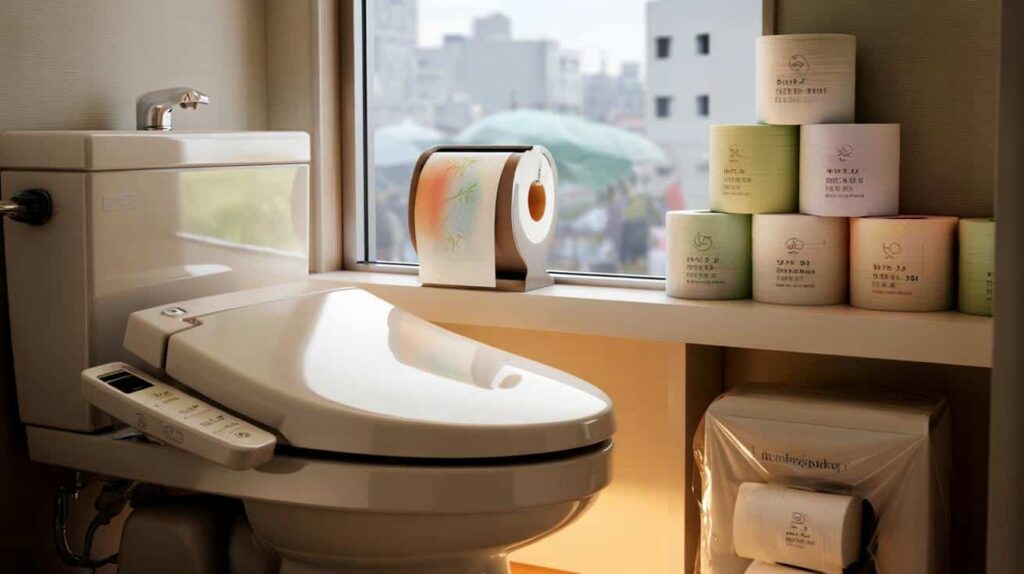
On a damp August morning in Tokyo, I watched a salaryman leave a convenience store carrying a single, almost comically tiny pack of toilet paper. Not the bulky 12-roll tower you’d see in a Western supermarket. Just four rolls, wrapped in pastel packaging, tucked neatly into his briefcase like an important file. No one stared. No one laughed. For him, this was just another practical choice in a country where bathrooms are turning into small, silent laboratories of comfort and conscience.
Inside, the shelves told a story: bamboo-based rolls, “disaster kit” toilet paper that lasts five years, scented sheets promising forest walks, and QR codes linking to water-saving tips. It felt less like a hygiene aisle and more like a quiet revolution taking shape, one square at a time.
What’s really changing isn’t just what’s on the roll, but how an entire country thinks about it.
From humble roll to quiet status symbol
Walk into a typical Japanese home and the toilet often gets the best real estate in terms of technology. Heated seats. Built-in bidets. Sound-masking buttons. Yet the star of the room is still that unassuming roll hanging by the side. In the past few years, brands have started treating toilet paper like fashion or skincare, dressing it up with subtle patterns, eco labels, and even seasonal editions.
Some rolls promise fewer sheets used per visit. Others boast cloud-soft texture or “premium thickness” that sounds more like marketing for a luxury mattress. The message is clear: this isn’t just paper anymore. It’s a lifestyle choice.
Take the viral “one-roll-a-week” trend that quietly spread across Japanese social media last year. Influencers began filming themselves trying to survive on a single roll for seven days, showcasing clever folding techniques and ultra-efficient bidet use. It sounds ridiculous, yet the numbers behind it are serious. Japan uses billions of rolls every year, and most are still made from virgin pulp.
So when a small company in Shikoku launched a 100% recycled, tightly wound roll that claims to last three times longer than standard ones, it sold out online in days. A supermarket in Osaka reported a 40% spike in sales of long-lasting “mega rolls” as shoppers looked to cut both waste and storage space. Tiny change, big ripple.
There’s a deeper logic hiding under all that soft paper. Japan’s aging population means more people with mobility issues, more time spent at home, and more attention to daily comfort. Housing is compact, storage is limited, disaster risk is high. Stocking massive packs of toilet paper simply clashes with real life. So the market shifted. Smaller packs, more efficient rolls, and **subtle eco-badges** that reassure buyers they’re doing the right thing without lecturing them.
At the same time, utilities are under pressure. Water use, sewage systems, waste processing – all of it gets tangled up with what happens in the bathroom. So innovation here isn’t a cute detail. It’s a strategic front line.
The small rituals behind Japan’s toilet paper revolution
The quiet hero in all this is the bidet function built into so many Japanese toilets. That gentle jet of warm water changes the math dramatically. With proper settings and a bit of patience, most people can cut their toilet paper use in half or more. The ritual is simple: wash first, dab second, not the other way around.
Some families even set “default” water pressure and temperature for each member, saved in memory buttons alongside their preferred seat warmth. It feels weirdly intimate at first, like having a profile for your most private habits. But it works. Less friction, less paper, more comfort.
The main mistake newcomers make is treating the bidet like a novelty button instead of a daily ally. They press it once, laugh, get startled, and never touch it again. Or they crank the pressure to maximum and walk away traumatized. *The trick is to think of it less like a gadget and more like brushing your teeth.* Start soft, stay relaxed, and allow those extra 20–30 seconds.
We’ve all been there, that moment when you’re in a hurry and reach for way more paper than you truly need. The Japanese approach nudges you toward the opposite instinct: slow down, use water, then just finish with a small, careful fold. Let’s be honest: nobody really does this every single day. But making it the default rather than the exception changes how fast that roll disappears.
In one Tokyo share house I visited, the residents actually sat down and agreed on “toilet paper rules” to keep costs and waste under control. It sounded absurd, until they explained that a single careless guest could burn through a roll in a weekend.
They settled on three principles, written on a discreet sign above the holder:
“Paper is for finishing, not for doing all the work.
Water is your friend.
Future you will be grateful for a roll that doesn’t run out on a Sunday night.”
- Use the bidet first, then two to four squares to dry.
- Fold rather than scrunch for better efficiency.
- Keep one **emergency roll** hidden for earthquakes or supply hiccups.
- Choose recycled or bamboo rolls whenever possible.
- Talk openly about restocking instead of silently resenting each other.
This little system didn’t just cut their paper use. It turned a source of tension into a running joke and a shared responsibility.
What Japan’s tiny rolls reveal about the future
Once you notice this toilet paper revolution, you start seeing its edges everywhere. In the compact packs that slip easily into a bicycle basket. In offices that quietly switch to longer-lasting rolls to avoid constant restocking. In disaster-preparedness kits that include vacuum-packed, moisture-proof toilet paper alongside flashlights and crackers.
There’s a cultural thread running through all of it: small, repetitive gestures adding up to something bigger. No grand declarations, no dramatic bans. Just millions of people adjusting how they treat the most ordinary object in the most private room, nudged forward by smart design and gentle social pressure.
Some visitors walk away raving about the heated seats and robot-like toilets. Others, after a while, notice something subtler: they’re using less paper than back home, yet feeling cleaner, more at ease, strangely cared for by a system built around comfort and restraint. This shift doesn’t scream. It whispers.
And once your hand gets used to reaching for fewer sheets, it’s hard to go back.
| Key point | Detail | Value for the reader |
|---|---|---|
| Efficient use beats constant restocking | Japanese homes rely on bidets, folding techniques, and longer-lasting rolls | Spend less money, reduce waste, and avoid the stress of running out |
| Design shapes everyday habits | Smaller packs, recycled paper, and compact storage respond to real-life constraints | Ideas you can adapt at home without changing your entire bathroom |
| Small rituals, big impact | Daily choices in the toilet link to water use, sustainability, and comfort | Feel more in control of a hidden part of your footprint |
FAQ:
- Question 1Why does Japan use so much toilet technology if they’re cutting paper?
- Answer 1The tech and the paper reduction go hand in hand. Bidets and smart toilets replace the “scrub with paper” habit with washing and gentle drying, so technology becomes the tool that lets people feel cleaner while using fewer sheets.
- Question 2Are Japanese long-lasting rolls really different or just marketing?
- Answer 2Many of them are physically denser, with more tightly wound sheets and thinner cores. Some include micro-embossing to improve absorbency, so you genuinely get more use per roll, especially when paired with water cleaning.
- Question 3Can I copy this at home without a Japanese toilet?
- Answer 3Yes. You can start by using fewer sheets, folding instead of scrunching, choosing recycled or bamboo rolls, and keeping a small “reserve” stock. A simple bidet attachment on a regular toilet also brings you much closer to the Japanese experience.
- Question 4Is recycled toilet paper in Japan as soft as regular brands?
- Answer 4Some older recycled varieties felt rough, but newer Japanese brands often strike a good balance between softness and sustainability. Premium eco rolls can be surprisingly gentle, which is a big reason they’ve gone mainstream.
- Question 5Why do so many Japanese stores sell small packs instead of bulk?
- Answer 5Smaller homes, narrow hallways, and limited storage make bulky 24-roll packs impractical. Compact packs match everyday life better, and when rolls last longer, people don’t need huge towers of paper in the first place.