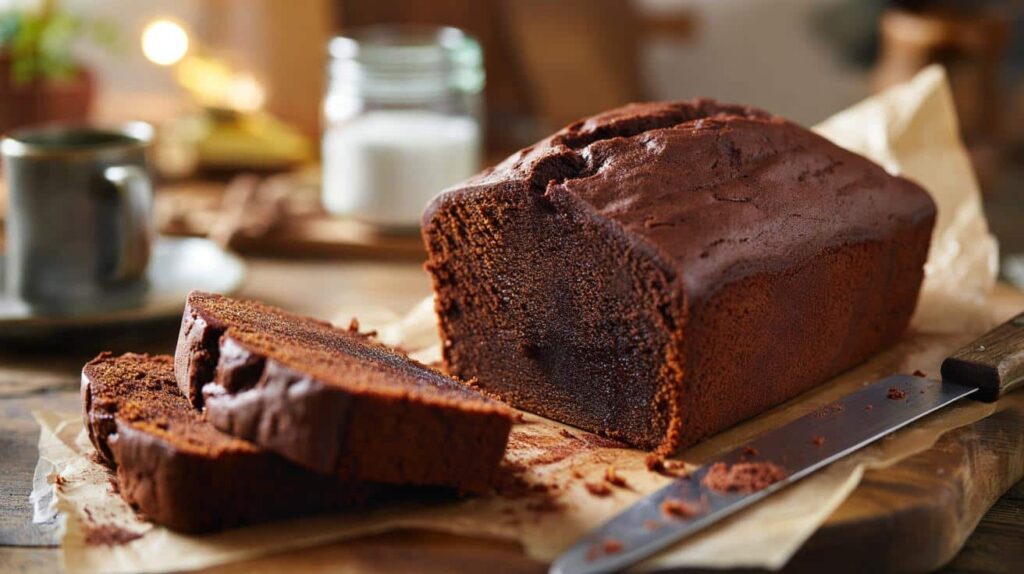
The cake came out of the oven looking like a commercial: high dome, deep brown, that faint shimmer of melted chocolate on top. Everyone cut themselves a fat slice, still a little warm, crumbs clinging to the knife. That first evening it was perfect. The kind of perfect that makes you close your eyes mid-bite without meaning to.
The next day, though, was another story. Dry edge. Tight crumb. The third day, no one even looked at it. The poor thing just sat there on the counter, slowly turning into a cocoa-flavoured sponge. At some point you stop baking “just in case”, because you know what’s coming on day two.
And yet, there’s a way to have a rich chocolate cake that stays moist for days, without hiding it under a mountain of frosting.
The quiet secret of a cake that doesn’t dry out
The most surprising thing about a long-lasting chocolate cake is that it doesn’t necessarily look spectacular when it comes out of the oven. It doesn’t need a shiny glaze or a dramatic crack in the middle. What you notice first is the weight when you lift it: there’s heft, but not brick-like heaviness.
You slice it on day one and the crumb is almost velvety, with tiny bubbles, not huge tunnels. The knife leaves a faint, shiny trace along the cut. On day three, you go back, half expecting disappointment, and the inside still looks slightly damp, almost as if it had been baked that morning. A cake like that doesn’t scream on social media. It just quietly disappears, slice by slice.
One home baker I spoke to swears by this kind of recipe. She bakes a dense chocolate loaf every Sunday evening for the week ahead. No frosting, no ganache, just a dark, modest-looking cake wrapped in parchment on her counter. On Wednesday night, after work, she cuts a slice and it’s still tender enough to eat without a drink on the side.
Her teenage son started taking chunks to school, then his friends began asking for “that black cake”. She ended up sharing the recipe in the class WhatsApp group. Parents messaged back days later, sending pictures of half-eaten loaves and slightly crooked slices. Nobody mentioned decoration. They all talked about the same thing: “How is this still moist on day four?”
There’s a simple logic behind this magic. Moisture in a cake comes from three main things: fat, liquid, and sugar. When those three are balanced correctly, the crumb holds on to water for longer. Butter lends flavour, but oil stays soft in the fridge and at room temperature, so a mix of both often works wonders. Ingredients like yogurt, sour cream, or even coffee deepen the taste and keep the interior supple.
Then there’s the baking time. A chocolate cake that lasts isn’t baked “until a toothpick comes out perfectly clean”. It’s baked until a few moist crumbs still cling. That tiny difference of three or four minutes in the oven can mean two extra days of pleasure on the plate.
The method: a rich, unfrosted chocolate cake that stays moist for days
Here’s the gesture that changes everything: instead of beating cold butter for ages, you start with a bowl and a whisk. Warm melted butter, a neutral oil, and sugar get stirred together until the mixture looks thick and a little glossy. Then come the eggs, one by one, whisked just enough to disappear. No stand mixer roaring on the counter, no cloud of flour flying in your face.
You sift cocoa and flour together, add a whisper of baking powder, a pinch of salt, then fold this gently into the wet mixture along with a generous splash of hot coffee or hot water. The batter looks a bit looser than you expect, almost like heavy cream. That’s your sign you’re on the right path. Thin batter, moist cake.
A lot of people stumble at the oven door. They pour this beautiful batter into the pan, slide it in, and then forget one crucial detail: chocolate cakes keep cooking once they’re out. If you wait until the center looks completely set and the skewer is bone-dry, you’ve already gone too far. We’ve all been there, that moment when you open the oven, sigh in relief, and then regret it the next morning when you meet the crumb.
The trick is to start checking a bit earlier than you think. When the top has formed a soft crust and the center no longer jiggles, test it. If the toothpick comes out with a few damp crumbs, you stop. It might feel risky the first time. Yet that’s exactly where the moist days-long texture is born.
*“The cake should look slightly underconfident when it comes out of the oven,”* laughs a pastry chef I interviewed. “If it looks too proud, it’s already too dry inside.”
- Use part oil, part melted butter for a soft, flavorful crumb that doesn’t harden overnight.
- Add yogurt, sour cream, or buttermilk to the batter to trap moisture for several days.
- Bake just until a few moist crumbs cling to a skewer, not until it’s perfectly clean.
- Let the cake cool in the pan for 10–15 minutes, then wrap slightly warm in parchment.
- Store at room temperature in an airtight box instead of the fridge whenever possible.
The plain truth: the best chocolate cake is the one you still enjoy on day three
There’s a sort of quiet relief in having a cake on the counter that you don’t have to babysit. No frosting to slide off, no glaze to crack, nothing that looks sad after one night in the fridge. Just a dark, fragrant loaf or round cake that you can slice thin for breakfast or thick after dinner. Let’s be honest: nobody really does this every single day.
That’s what makes this kind of recipe feel almost like a small luxury. You bake once, maybe for a birthday, a visit from friends, or just because the week looks long. Then you forget about it a little. It lives its own life under its wrap of parchment or beeswax, waiting quietly until someone suddenly wants “something sweet” with their coffee.
If you’ve ever thrown away a half-dry cake with a tiny stab of guilt, this approach changes the story. You stop chasing the most spectacular chocolate dessert and start looking for the one that truly fits real life. The one that can survive Monday meetings, kids’ homework, unexpected guests, and late-night Netflix. And that’s when you realize the best chocolate cake might actually be the simplest one, rich enough to stand on its own, moist enough to last, without a crown of frosting to distract from its real personality.
| Key point | Detail | Value for the reader |
|---|---|---|
| Fat balance | Use both oil and melted butter for flavor and long-lasting softness | Keeps the cake tender for several days without frosting |
| Extra moisture | Add yogurt, sour cream, or buttermilk plus hot coffee or water | Creates a deep chocolate taste and a velvety crumb |
| Baking and storage | Stop baking at moist-crumb stage, wrap while slightly warm, store airtight | Prevents drying and preserves that “just baked” texture |
FAQ:
- How do I stop my chocolate cake from drying out after one day?Use a recipe with enough fat and liquid, avoid overbaking, and wrap the cake once it has mostly cooled but is still faintly warm. Store it at room temperature in an airtight container rather than uncovered on the counter.
- Can I really skip frosting and still have a moist cake?Yes. A well-balanced batter with oil, melted butter, and an ingredient like yogurt or sour cream stays moist on its own. Frosting becomes a choice, not a crutch.
- Does coffee change the taste too much?When used in moderate amounts, hot coffee deepens the chocolate flavour instead of making the cake taste like coffee. If you’re sensitive to the idea, you can use hot water or hot milk instead.
- How long can this kind of chocolate cake stay moist?Properly baked and well wrapped, it usually stays pleasantly moist for three to four days at room temperature. After that, the texture slowly tightens but it’s still good toasted or warmed slightly.
- Can I turn this into cupcakes or a layer cake?Yes, but watch the baking time closely because smaller cakes dry out faster. For layers, you can fill with cream or jam while keeping the sides unfrosted if you like the more minimalist style.